Dollar Cost Averaging Strategy: Does It Really Work in 2026?
Dollar cost averaging (DCA) is one of the most discussed investing strategies — and also one of the most misunderstood. It’s frequently cited as the “safest” way to invest, but research actually shows a more nuanced picture. This guide explains exactly what DCA is, when it works best, when lump-sum investing beats it, and why the distinction matters less than most people think.
What Is Dollar Cost Averaging?
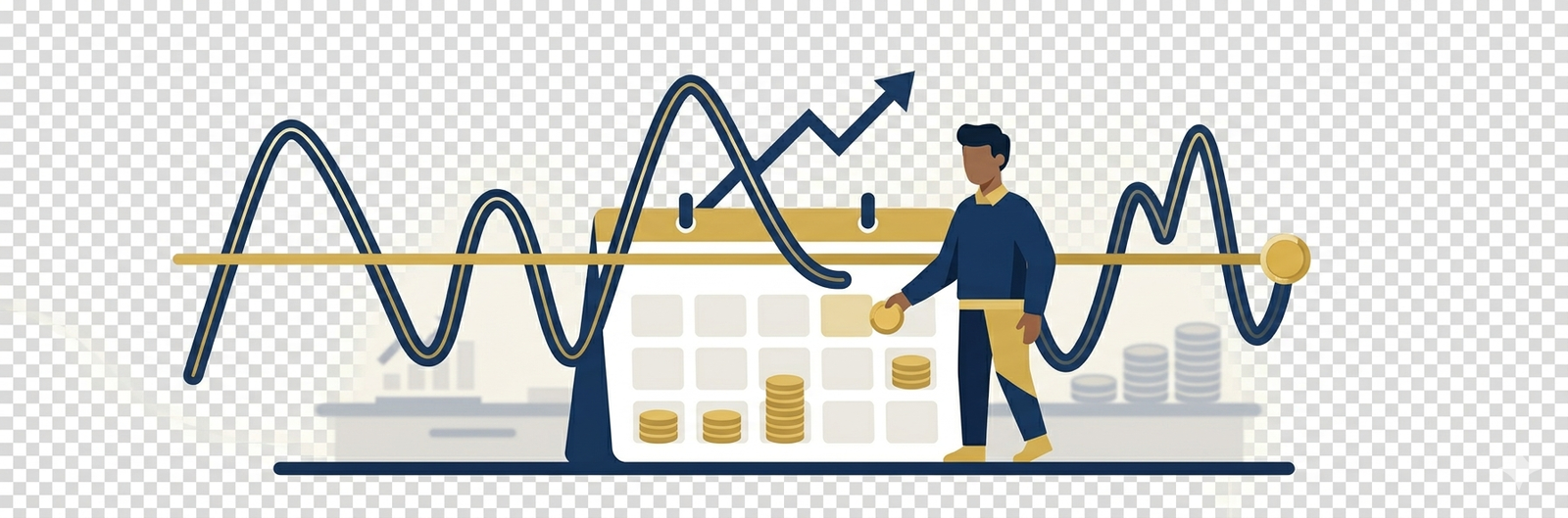
Dollar cost averaging means investing a fixed dollar amount at regular intervals (weekly, monthly, quarterly) regardless of market conditions. When prices are high, your fixed amount buys fewer shares. When prices are low, your fixed amount buys more shares. Over time, your average purchase price tends to be lower than the average price over the same period.
Example: You invest $500/month in VOO for 12 months regardless of price.
January: VOO at $480 → buy 1.04 shares
March (market down): VOO at $420 → buy 1.19 shares (more shares for same money)
July (market up): VOO at $510 → buy 0.98 shares
December: VOO at $495 → buy 1.01 shares
Result: Your average cost per share is lower than the average market price over the year because you bought more shares when prices were lower.
DCA vs Lump Sum: What Research Shows
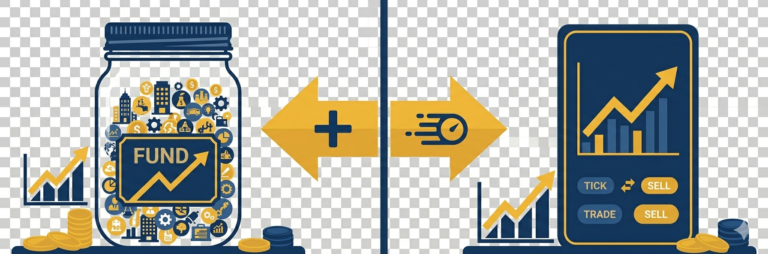
Multiple studies, including a widely cited Vanguard analysis, find that lump sum investing (investing all available money immediately) outperforms dollar cost averaging approximately 66% of the time over 10-year periods. The reason is simple: markets trend upward over time, so money invested earlier has more time to compound.
However, the research has an important caveat: it assumes you have a lump sum available to invest. For most working people, this is irrelevant — they receive income monthly and invest as money becomes available. In that context, DCA is not a choice; it’s simply the natural result of investing from regular paychecks.
When DCA Clearly Wins: Behavioral Finance
Where DCA definitively beats lump sum is behavioral. Research on investor behavior consistently shows that people who make large lump sum investments often make poor timing decisions — they delay investing waiting for “the right time,” panic sell after a post-investment decline, or experience significant regret if markets drop shortly after a large investment. DCA removes these behavioral traps.
The investor who DCA’s $500/month consistently for 30 years will almost certainly outperform the investor who tried to time lump sum investments — because the DCA investor actually followed through.
How to Implement Dollar Cost Averaging for Index Funds
Step 1: Determine your monthly investment amount — see how much to invest in index funds.
Step 2: Choose your index fund(s) — see best index funds for beginners.
Step 3: Open an account at Fidelity, Vanguard, or Schwab and set up automatic monthly investing. At Fidelity: Account → Recurring Transactions → Automatic Investment. At Vanguard: Transact → Automatic Investment. At Schwab: Accounts → Automatic Investing.
Step 4: Set it and don’t touch it. The power of DCA is consistency — don’t pause contributions during market downturns (that’s exactly when you’re buying at lower prices) and don’t increase contributions impulsively during bull markets.
DCA During Market Crashes
Market crashes are when dollar cost averaging feels most painful and provides the most value. When the market drops 30%, your monthly $500 is buying 43% more shares than before the crash. Every share purchased during a bear market comes back up when markets recover — and markets have recovered from every crash in US history. Investors who maintained DCA through the 2008-2009 financial crisis, the 2020 COVID crash, and the 2022 bear market all benefited enormously from continuing to buy at lower prices.
FAQ
How often should I invest with DCA?
Monthly is the most practical frequency for most investors — it aligns with paycheck cycles and is simple to automate. Weekly DCA provides marginally more price averaging but adds complexity without meaningfully improving outcomes. Monthly automated investing is the sweet spot.
Should I dollar cost average into an emergency fund?
Your emergency fund (3-6 months of expenses) should be in a high-yield savings account, not invested in index funds. Keep emergency savings completely separate from investment accounts. Only money you won’t need for at least 5 years belongs in index funds.