How to Start Investing in Index Funds: Step-by-Step Guide
Starting to invest in index funds is simpler than most people expect. You do not need a financial advisor, specialized knowledge, or a large sum of money to get started. This step-by-step guide walks you through everything — from opening your first account to making your first investment — in plain language.
Disclaimer: This content is for educational purposes only and does not constitute financial advice. Consult a qualified financial advisor for advice specific to your situation.
Step 1: Understand What You Are Investing In
Before investing any money, make sure you understand what index funds are and how they work. Read our complete guide on What is an Index Fund? if you have not already. The core concept: you are buying a small piece of many companies at once, your investment grows as those companies grow, and you pay very low fees for this service. Simple, proven, and powerful.
Step 2: Choose Your Account Type
Before choosing a brokerage, decide what type of account you want. The account type determines how your investments are taxed.
401(k) or 403(b): If your employer offers a retirement plan with an employer match, start here. The match is free money — contribute at least enough to get the full match before investing anywhere else.
IRA (Individual Retirement Account): After maximizing your employer match, a Roth IRA or Traditional IRA is typically your next best account. Roth IRA contributions are made with after-tax money and grow tax-free. Traditional IRA contributions may be tax-deductible and grow tax-deferred. The 2024 annual contribution limit is $7,000 ($8,000 if you are 50 or older).
Taxable brokerage account: After maximizing tax-advantaged accounts, a regular taxable brokerage account has no contribution limits and no restrictions on withdrawals.
Step 3: Choose a Brokerage
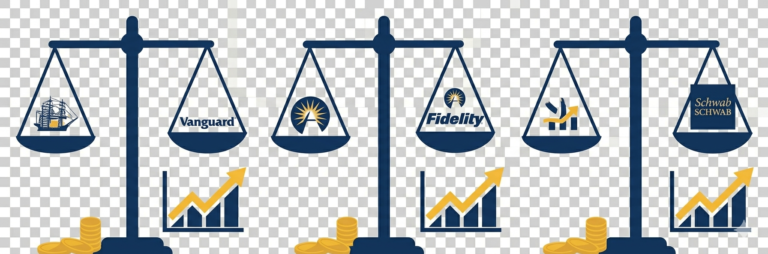
For index fund investing, the three most recommended brokerages for beginners are Fidelity, Vanguard, and Charles Schwab. All three offer excellent index funds at very low costs with no account minimums. Read our comparison in Best Brokerages for Index Fund Investing for detailed comparisons.
Fidelity: Best for beginners. No account minimums, no investment minimums on their index funds, excellent educational resources, and zero-expense-ratio index funds.
Vanguard: The pioneer of index fund investing. Owned by its fund investors, which aligns incentives perfectly. Slightly higher minimums on some funds but industry-leading low costs.
Charles Schwab: No minimums, competitive costs, excellent customer service and branch network for those who prefer in-person support.
Step 4: Open Your Account
Opening a brokerage account takes about 15 minutes online. You will need your Social Security number, a government-issued ID, your bank account information for initial funding, your employment information, and basic personal information. The brokerage will verify your identity and typically have your account ready within 1 to 3 business days.
Step 5: Fund Your Account
Transfer money from your bank account to your new brokerage account. This usually takes 1 to 3 business days for the transfer to clear. You can start with whatever amount you have — even $50 or $100 is a legitimate starting point. What matters is building the habit of regular investing.
Step 6: Choose Your First Index Fund
For most beginners, a total US stock market index fund or an S&P 500 index fund is the perfect starting point. Both give you broad diversification across hundreds of US companies at very low cost. Specific fund recommendations are in our guide on Best Index Funds for Beginners.
Step 7: Make Your Investment
Search for your chosen fund by name or ticker symbol in your brokerage account. Enter the dollar amount you want to invest. Review the order details and confirm. That is it — you are now an index fund investor. The entire process from account opening to first investment can be completed in under an hour.
Step 8: Set Up Automatic Investments
The most powerful investing habit is automating regular contributions. Set up automatic monthly transfers from your bank account to your brokerage, and automatic investment into your chosen fund. This removes emotion from investing and ensures you continue building wealth consistently regardless of what the market does. Read our guide on Dollar Cost Averaging With Index Funds to understand why this strategy works so well.
Conclusion
Starting to invest in index funds requires less time, money, and expertise than most people assume. The hardest part is simply getting started — and now you have everything you need to do it. Continue with Best Index Funds for Beginners and Index Funds vs ETFs.